

Science is complex — but communication doesn’t have to be. In life science and technology, the challenge isn’t always the innovation itself, but how it’s understood. Investors, partners and users often need to grasp ideas quickly, and the way those ideas are presented can directly impact trust, engagement and growth.
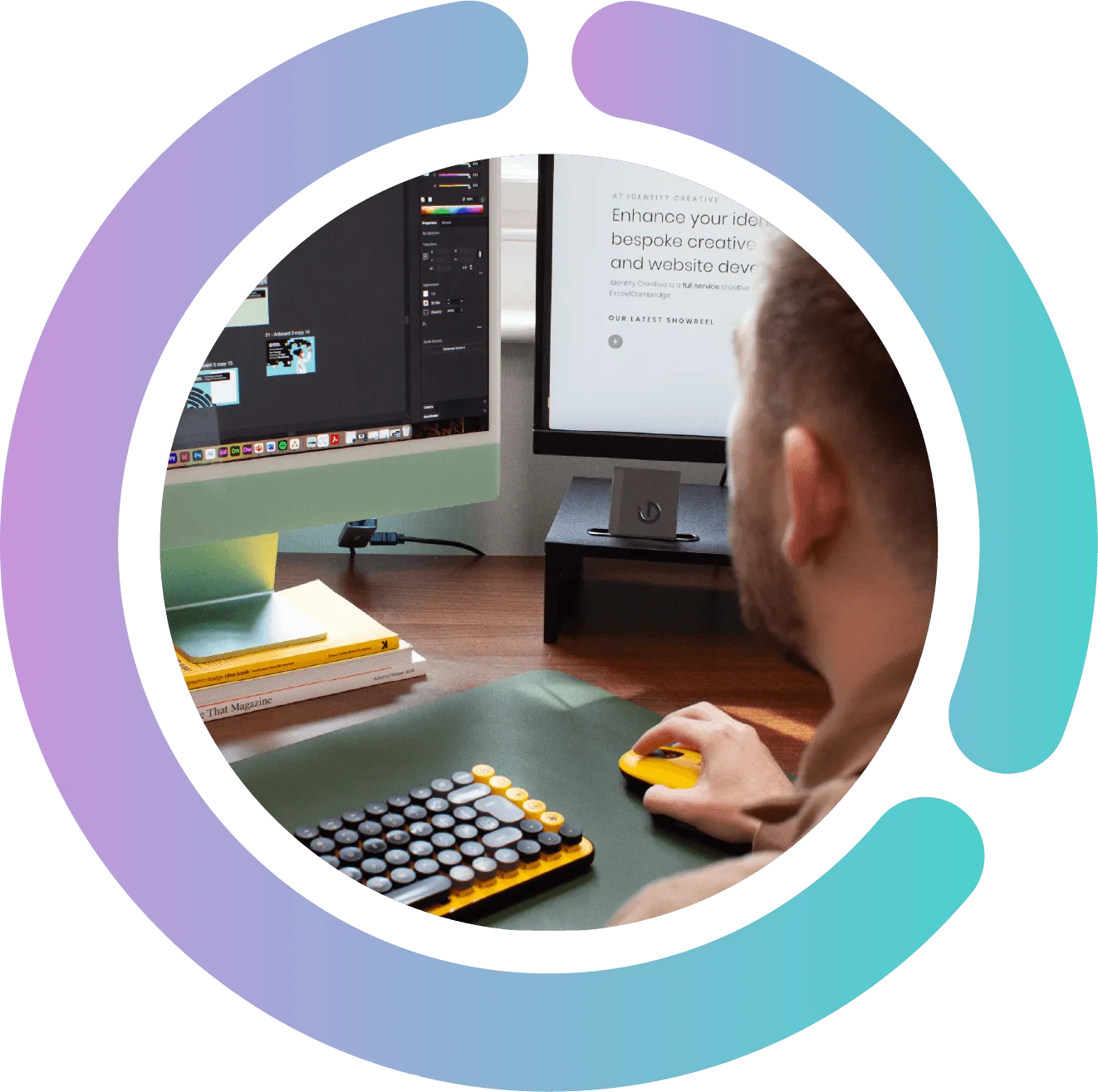
Whether it’s a website, pitch deck, brand identity or social content, perception is shaped before the detail is even read. Design and development support in bridging that gap.
Whether it’s a presentation, infographic or website, it is important to maintain clear structure, visual storytelling and thoughtful design. This caters your communication to all audiences and translates complexity into something accessible and engaging, clearly presenting your innovation to investors, partners and the wider public.
A well-crafted brand and presence both digital and in-person signals professionalism, reliability and maturity – all of which are critical when building trust in competitive and highly technical sectors.
From social media and conferences to presentations and digital platforms, every touchpoint plays a role in shaping perception and guiding users. Well-designed, structured and optimised assets work together to improve engagement and turn interest into meaningful action.
As businesses grow, maintaining consistency across these touchpoints becomes increasingly important. Design systems, templates and easy-to-manage websites enable teams to create content efficiently while maintaining quality and cohesion.
For start-ups in particular, where budgets are often limited, investing in the right foundations – such as a strong brand identity, reusable templates or a flexible CMS allows teams to scale communication effectively without constant redesign or resource strain. Design becomes more than a one-off exercise; it acts as a foundation for growth, helping businesses stay clear, consistent and aligned as they evolve.
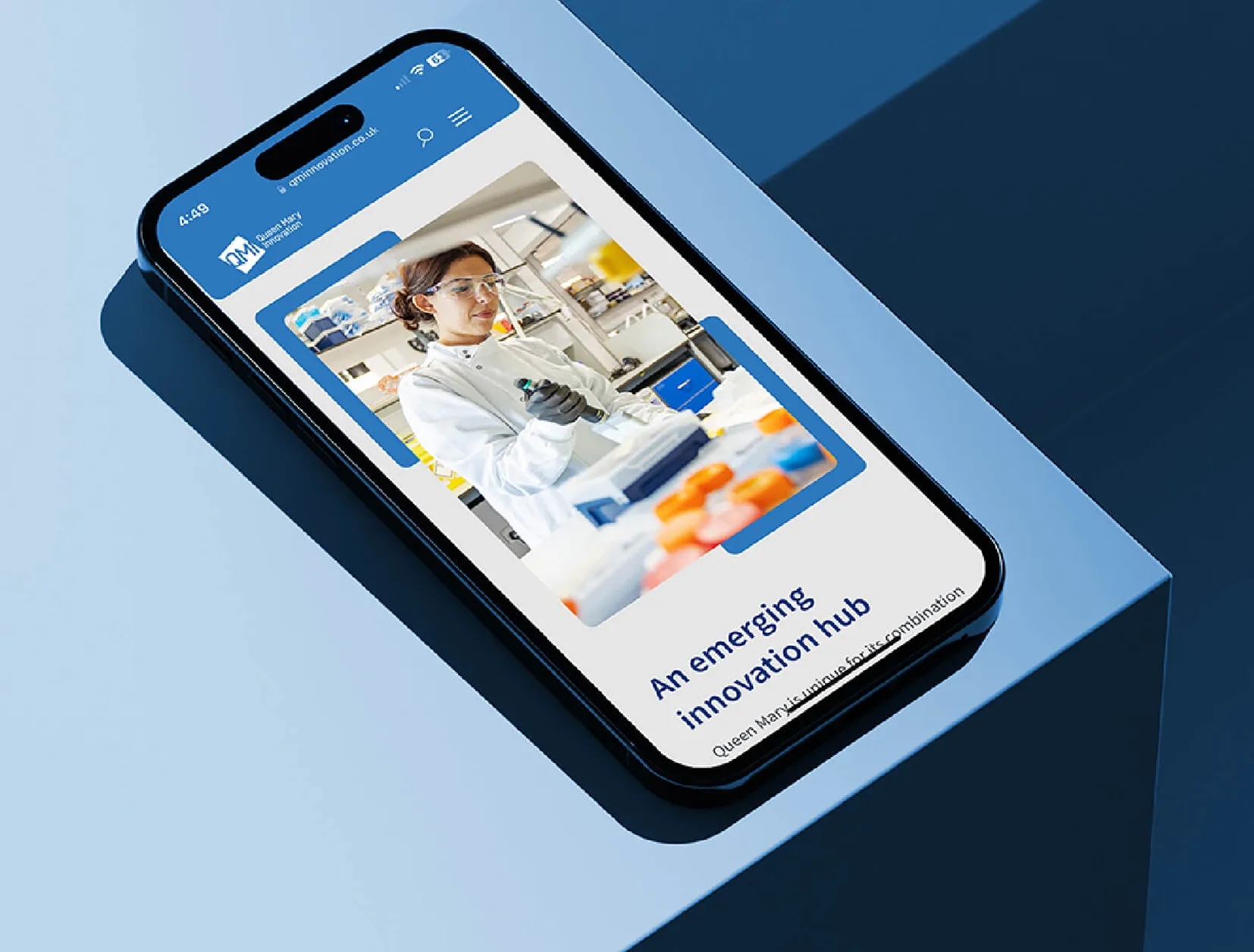
QMI needed a website that better reflected their role as the commercial arm of QMUL. Their existing platform lacked structure and clarity, making it difficult to communicate their offering.
We partnered with QMI to design and develop a modern, user-friendly website that acts as a central hub for information and resources. Built on a flexible CMS, the new platform allows their team to easily manage content, from research partnerships to innovation projects.
The result is a clear, SEO-friendly digital presence that improves credibility, enhances visibility, and supports long-term growth – positioning QMI as an ambitious and influential leader in innovation.
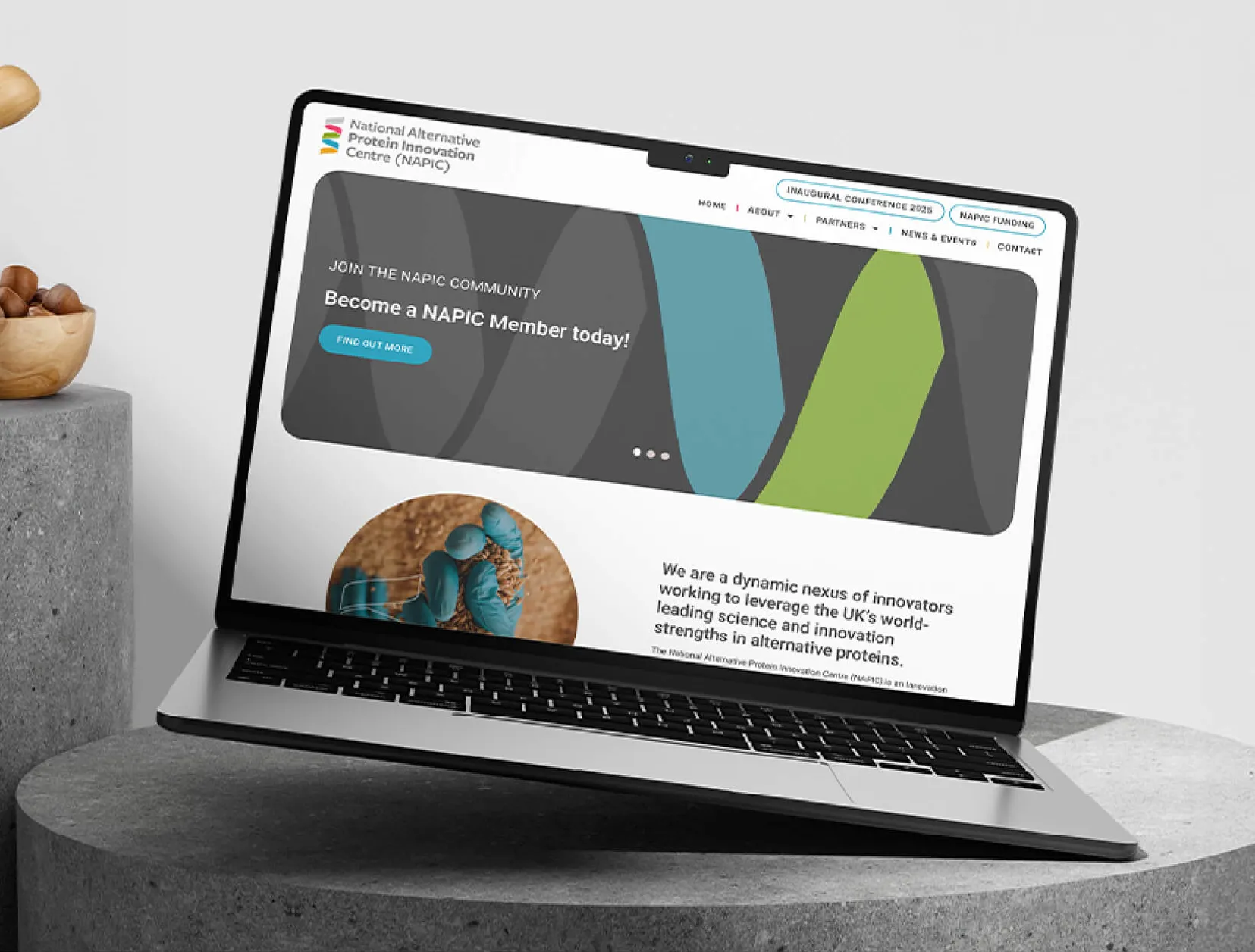
NAPIC required a brand and website that reflected their role as a pioneering, collaborative research centre focused on sustainable protein innovation. Their previous website lacked an intuitive user journey, and their brand identity didn’t fully communicate their ambition or approachability.
We partnered with NAPIC to develop refreshed brand guidelines and a cohesive design system, which were then applied across a new digital platform. The result is a clear, engaging website that supports ongoing growth – enabling them to share research, funding updates and events with confidence.
Design and development aren’t just aesthetic – they shape how your business is perceived, understood and trusted across every touchpoint. The better you communicate, the easier it is for others to engage, invest and act.
References: